


Technology determines quality.
Every tank head, cone and special pressed part starts with choosing the right manufacturing process. With state-of-the-art forming technology, high-performance production facilities and decades of experience, KÖNIG + CO. delivers cost-effective solutions for demanding applications in vessel and plant engineering.
Technical Precision in Metal Forming
The manufacture of pressure vessel heads, cones and special pressed parts demands the highest levels of precision and an in-depth understanding of materials and forming processes. At KÖNIG + CO., nearly 100 years of metal forming expertise is combined with modern production facilities and rigorous quality assurance processes.

With our unique range of deep-drawing equipment for tank heads, we offer our customers virtually any head shape in diameters ranging from 21.3 to 2,100 mm. We also achieve the highest level of dimensional accuracy with wall thicknesses ranging from 2 to 200 mm. Using the dishing and flanging process, we produce one-piece tank heads with diameters of up to 8,200 mm, wall thicknesses of up to 120 mm and individual component weights of up to 30 tonnes.

Cold and Hot Forming
In deep drawing, a flat sheet of metal is formed into a three-dimensional shape under high pressure. This process forms the basis for manufacturing many vessel heads and enables uniform material distribution and precise geometries.
Deep drawing is particularly well suited to small and medium diameters up to 2,100 mm.


Dishing and Flanging
Dishing and flanging are key processes in the manufacture of tank heads. Dishing creates the domed base shape, while flanging forms the rim, which is subsequently joined to the vessel shell.
The combination of both processes results in stable and dimensionally accurate components for use in pressure vessels.
Edge Preparation
Edge preparation machines the head's edge to the required weld bevel (e.g. V, Y or U bevel) for fit-up to the vessel shell.


Welding
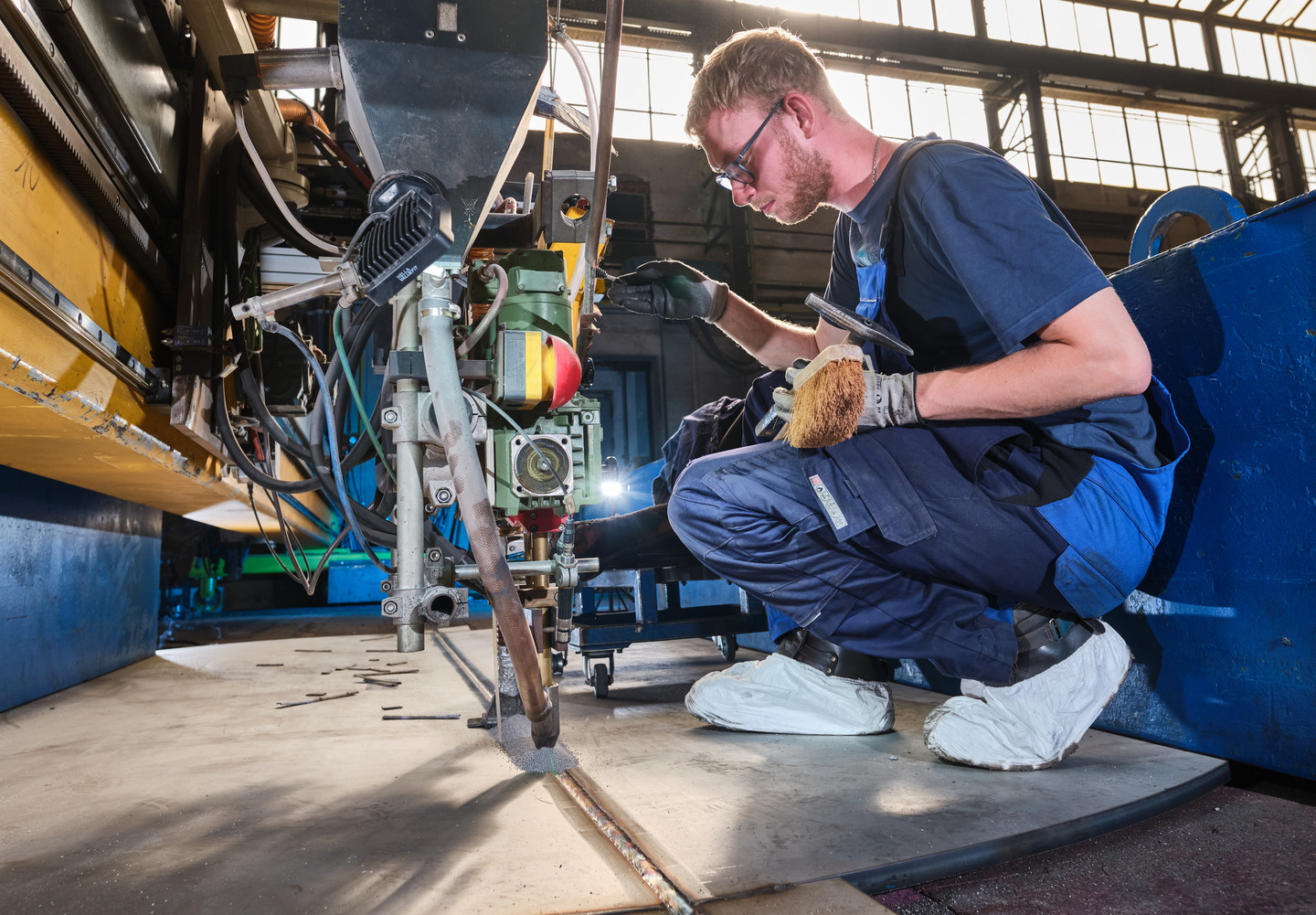
Depending on specifications, different welding processes are used to ensure the highest standards of quality and safety for use in pressure vessels and industrial plant.
These include:
- Plasma TIG welding
- Submerged arc welding (SAW)
- Electroslag strip cladding
- MIG / MAG
- Manual metal arc welding (MMA)
Heat Treatment
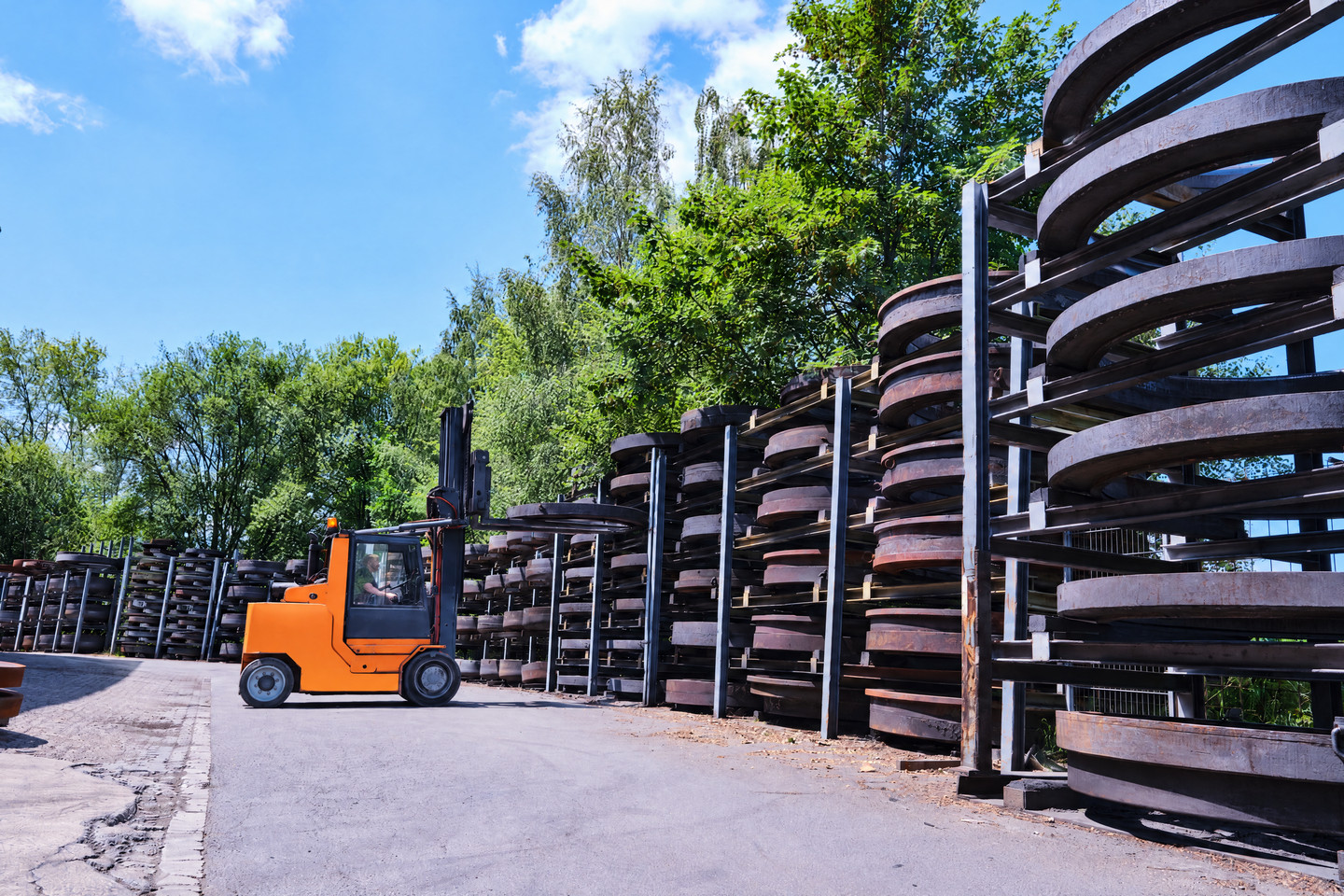
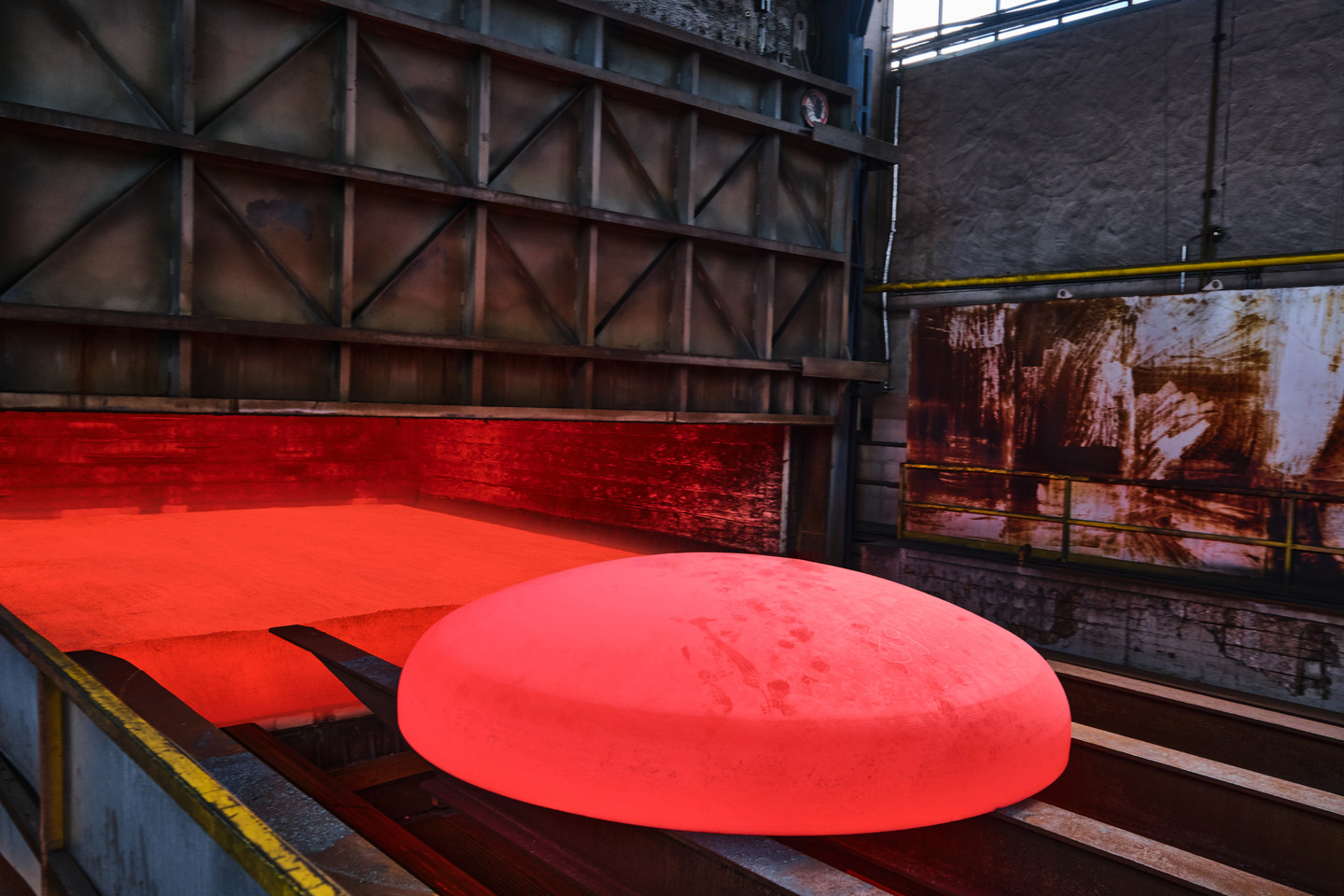
One of the world’s largest heat treatment facilities with NORSOK certification
It comprises a high-capacity furnace combined with a 500,000-liter water quench tank and a 40-tonne furnace charge.
In order to best meet your requirements, we offer a range of processes:
- Normalizing (850–980 °C)
- Tempering (650–750 °C)
- Stress-relief annealing / PWHT – Post-Weld Heat Treatment (595–720 °C)
- Solution annealing (1,000–1,180 °C)
- Soft annealing

Surface Treatment
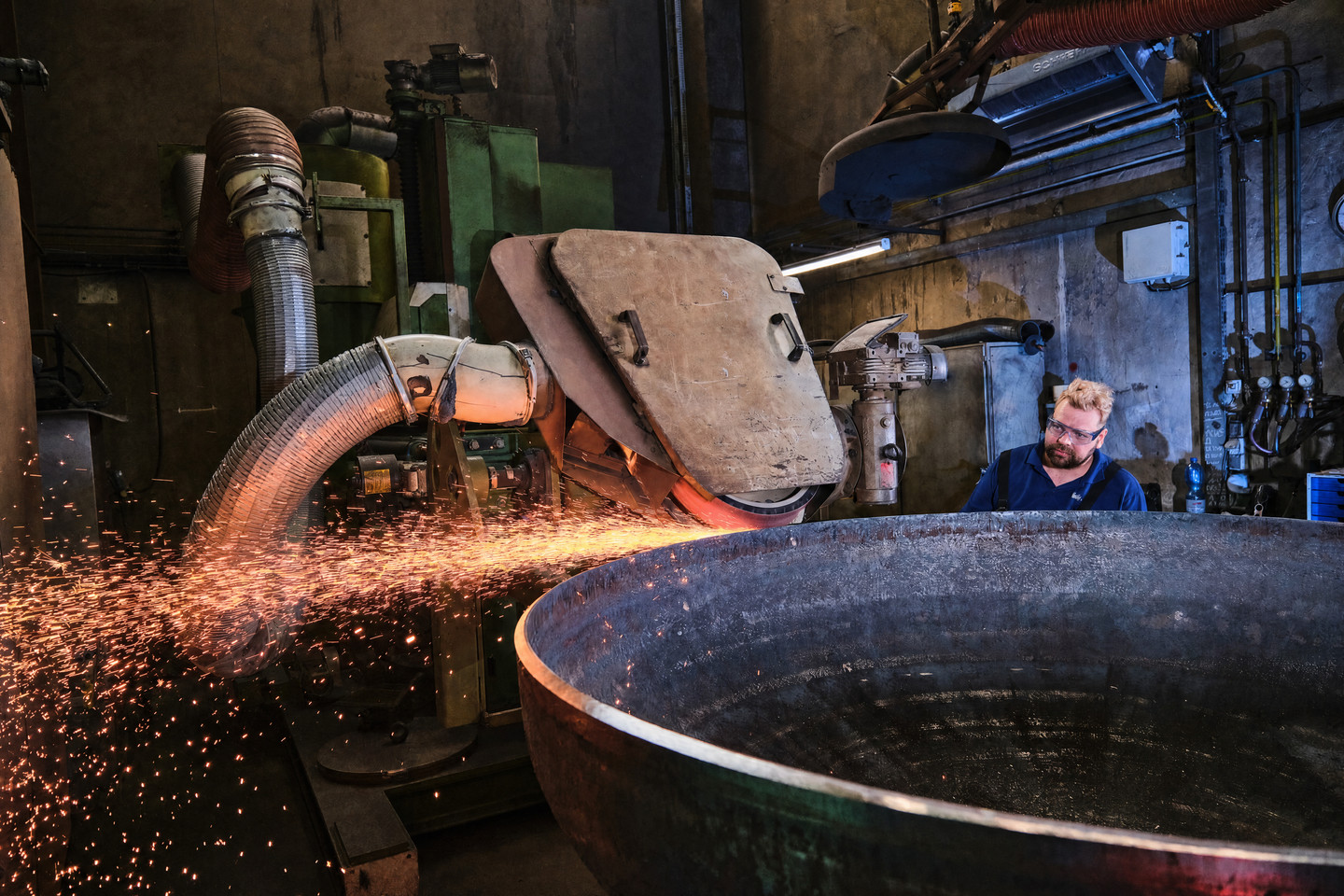
Our range of services includes various surface treatment methods, such as sandblasting, pickling and internal and external grinding, across all size ranges.


3D Robotic Cutting
Using our 3D robotic cutting system, we perform cutouts and perforations – including complete edge preparation – in any position. Cutouts can be aligned radially or axially, and even complex perforations, e.g. in the flange area, can be produced. Plate thicknesses of up to 85 mm can be processed using the plasma cutting process, and up to 200 mm using the oxy-fuel cutting process.


Engineering and Manufacturing Expertise
Support with technical requirements
In addition to manufacturing, KÖNIG + CO. also supports its customers with technical inquiries relating to the production of formed parts.
This includes, for example
- Assistance with the selection of suitable materials
- Assessment of component geometries and formability
- Production of special shapes and custom solutions
This close collaboration results in components that are optimally tailored to the requirements of the respective application.
Materials and their properties
Carbon steels are among the most commonly used materials in vessel manufacturing and industrial plant engineering. They offer a good combination of strength, formability, and cost-effectiveness, making them suitable for a wide range of industrial applications. Carbon steel is a particularly well-established material for conventional pressure vessels and tanks.
Stainless steel offers excellent corrosion resistance and good mechanical properties. This makes it particularly suitable for use in the chemical, food processing, and pharmaceutical industries, where high standards of hygiene and corrosion resistance are essential.
Duplex stainless steels are known for their exceptional strength and corrosion resistance, making them highly durable and suitable for a variety of applications. These materials are widely utilized in challenging industrial settings, such as the chemical and petrochemical industry, power plants, and offshore applications.
Nickel-based alloys are known for their exceptional resistance to corrosion, high temperatures, and aggressive media. They are primarily used in industrial processing plants operating under extreme conditions.
Titanium is known for its exceptional corrosion resistance and low weight. These properties make it particularly suitable for specialized applications in the chemical industry and industrial plants operating under highly demanding conditions.
Clad materials combine the advantages of different materials. A corrosion-resistant layer is metallurgically bonded to a load-bearing base material. This solution enables cost-effective design while providing high resistance to corrosive media.